


General John Armstrong Jr.

〝An Insidious Foe〞

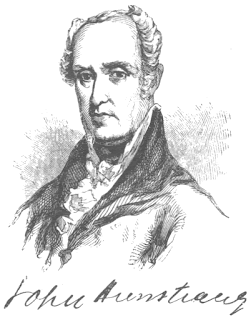
John Armstrong Jr. was born in Carlisle, Pennsylvania to Scots-Irishman John Armstrong Sr. (obviously) and his wife Rebecca Lyon Armstrong (her maiden and married name which meant she didn’t have to get her linens re-monogrammed) on November 25, 1758. Records of his childhood are pretty minimal so its unclear if he was a trouble maker then but he was certainly well on his way to being one by the time the Revolutionary War broke out.
The War
His career started off innocuously enough in the Pennsylvania militia, bur John Armstrong Sr. had been adamant that his two sons would receive the best possible educations they could. This soon brought Armstrong to the attention of General Hugh Mercer, who made him his aide-de-camp. Had he been able to stay with Mercer, Armstrong probably would have had an exemplary military career.

Unfortunately while on route to Princeton on January 3, 1777 with the 350 men of the Continental vanguard, Mercer encountered the British army. His horse was shot out from under him and he was quickly surrounded and cut off from his military family (including Armstrong) by the British. Getting to his feet, Mercer was ordered to surrender. Instead he drew his sword and began hacking, slashing and thrusting at the British around him. He never stood a chance and was soon beaten to the ground and bayoneted at least seven times.
As the rest of the Continental Army delivered a decisive beating to the British at Princeton. Armstrong carried Mercer into a nearby house. Despite the best medical care available in the form of one of America’s leading doctors, Benjamin Rush, Mercer died nine days later.


Armstrong was next asked to act as an aide to General Horatio Gates for whom he would work off and on for the rest of the war. Given Gates success at the Battles of Saratoga and George Washington’s relative lack of success in 1777, what with losing Philadelphia and all, an informal cabal formed seeking to replace Washington with Gates.
This meant that friends of Gates were always a question mark in Washington’s mind. This included Armstrong, who was desperately seeking advancement in the army at this point. Armstrong joined the expedition against Castine, Maine but this also ended in disaster and a court martial for Paul Revere, who may have left some men to fend for themselves in order to save his personal baggage.
Armstrong was then made adjutant general of the army in Rhode Island but was immediately replaced. When the British evacuated Newport, Rhode Island Armstrong was sent to congress with the news, a job that traditionally ended with a promotion for the messenger. Armstrong received nothing. The taint of the cabal was strong.
In 1780, he fortunately missed the Battle of Camden after coming down with Malaria. That battle saw Gates abandon his army and retreat further, faster than anyone thought possible. Two more undistinguished years found Armstrong encamped with the army at Newburgh. There Armstrong wrote two letters designed to stir up trouble. The letters, addressed to the officers of the army, claimed that Congress was trampling upon their rights by not paying them and not having a retirement plan ready for them. The letters seemed to hint at a coup by the army. They called for a meeting of the officers.
“Can he be a friend to his country? Rather is he not an insidious foe?”
On March 15, Washington took control of the meeting and reconfirmed his control of the army. As he spoke he called out the then anonymous letter writer “Can he be a friend to the Army?” said Washington. “Can he be a friend to his country? Rather is he not an insidious foe?” He pulled out his glasses and said something to the effect of “Gentlemen, you will permit me to put on my spectacles, for I have not only grown gray but almost blind in the service of my country” he read a letter from Congress promising benefits to the army officers as the men who had been contemplating mutiny wept openly.
After the Revolutionary War
Armstrong returned to Pennsylvania where he almost caused a civil war in 1784 by leading 400 militia men into the Wyoming Valley to try to run off some settlers from Connecticut. Connecticut and Vermont, for some reason, responded with militias of their own.
Only the timely interdiction of Timothy Pickering stopped blood shed, sent the militias home, and allowed the settlers to keep their land. Armstrong next spent two rather unimpressive years in the Continental Congress in 1787 and 1788, or as it was then known the Congress of Confederation. They were essentially a lame duck congress limited not only by the powers granted them under the Articles of Confederation but by the knowledge that their very form of government would soon be replaced by the new Constitution.

In 1789 Armstrong made his career by marrying Alida Livingston, the youngest daughter of Judge Robert R. Livingston and Margaret Beekman Livingston. He was now brother-in-law to Chancellor Robert R. Livingston, as well as the young and upcoming politician Edward Livingston. Armstrong parlayed his family connections into three stints in the Senate between 1800 and 1803 during which time he took part in a conspiracy to give the Livingston faction total control of New York State which eventually led to the death of Alexander Hamilton. In 1804 Armstrong replaced his brother-in-law Chancellor Robert R. Livingston as minister to France where he stayed until 1810, holding the post under both Thomas Jefferson and James Madison.
Upon returning to America he built a house called La Bergerie on land his wife inherited from her parents. They had seven children, including a daughter Margaret Rebecca, who would later marry into the Astor family. The Astors renamed La Bergerie, Rokeby, by which it is still known today. The main activity at La Bergerie was raising merino sheep purchased from the Chancellor, seventh Secretary of War of the United States.
War of 1812

In 1813, during the War of 1812, James Madison tapped John Armstrong to become the seventh Secretary of War of the United States.
Armstrong was utterly out of his league and had no idea of what to do to prepare the army for the impending British invasion. When the British landed in Maryland the army simply ran away in a battle that became mockingly known as “The Bladensburg Races.”
The British then marched into Washington D.C. and burned it down.
A month later Madison unceremoniously fired Armstrong, who returned to Rokeby, his public career over. But let’s be honest. There’s not a lot of places to go after you let the British burn down the White House. Alida passed away in 1822. Armstrong spent the rest of his life tending his sheep and writing. He died in 1843 and is buried in Rhinebeck.
There’s not a lot of places to go after you let the British burn down the White House.


