


Forced to Serve
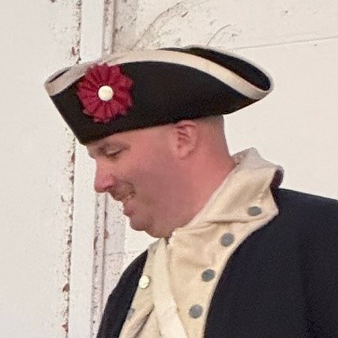
The system of slavery was so deeply ingrained in colonial American culture that when white officers joined the Continental Army they brought along a valet. This was a delicate way of saying that they were bringing an enslaved man to war, for no pay, to take care of them and sometimes even put them in danger.
William Lee
The most famous of these men was William Lee. Lee had been purchased by George Washington in the 1760s. Lee was at Washington’s side for the whole war. He was reputedly an excellent horseman, which he would have had to have been to keep up with Washington while he galloped around battlefields directing and encouraging his men. Lee carried Washington’s water and his telescope. At other times Washington used Lee to carry messages to other officers scattered around the battlefield.

Lee’s other responsibilities including taking care of Washington’s clothes, helping him dress in the morning, and keeping the headquarters tent clean. Washington also put Lee in charge of organizing his daily correspondence which indicates the Lee may have been literate.
After the war Lee injured his knees and was unable to continue as Washington’s valet. He was sent back to Mount Vernon where he became a shoemaker. When Washington died his will freed William Lee and included an annual allowance. Lee stayed at Mount Vernon and became a tourist attraction himself until his death in 1810.
Montgomery's enslaved man
During his brief time in the Continental Army Richard Montgomery did what he could to keep himself comfortable. He often rode in a couch while other officers were on horseback. Of course, Montgomery needed an enslaved man to take care of his personal needs.

The 1775 campaign into Canada got a late start in the season and the soldiers were soon faced with brutal cold and snow. How Montgomery’s enslaved man endured the cold would have depended largely on Montgomery. What clothes he gave him. Was he allowed to share a fire? A tent?
Montgomery died in the streets of Quebec on the night of December 31, 1775. Shortly thereafter most of Montgomery’s possessions were auctioned off to other officers in the army. Benedict Arnold bought his breeches. A few things were deemed to personal to auction off. They were given to Montgomery’s enslaved man, who was then sent south to Montgomery’s widow, Janet Livingston Montgomery. The rest of his story is unknown. Did Janet free him or continue to enslave him? Did he self-emancipate or was he sold to another enslaver for money?
Jack
Montgomery’s brother-in-law, Colonel Henry Beekman Livingston of the 4th New York Regiment brough Jack, an enslaved man, with him to war. Jack is mentioned in a few of Livingston’s letters from Valley Forge. In one letter Livingston complimented Jack’s cleverness in making his blanket into a pair of breeches and a coat. Livingston thought of having him do the same for him but decided he preferred his blanket to be a blanket.
Jack did draw Livingston’s ire once early in the encampment when it was discovered that he had failed to pack Livingston’s shirts when they marched south from Albany, which left him with only the shirt he was wearing.
Livingston also showed a huge amount of trust in Jack at one point during the encampment. Livingston’s horse had become lame, so he sent Jack back to New York with the animal with orders to return with a fresh horse.
Livingston resigned from the army in January of 1779 and eventually made his way back to his estate in Rhinecliff. Here again we lose Jack’s story. Contemporary sources tell us that Livingston saw some of his enslaved people self-emancipate. We also know that he periodically ran into money troubles and may have been forced to sell his enslaved people. One thing that seems unlikely is that Jack had any control over where time would take him.
America's original sin
Slavery has been called America’s original sin. But it was also a remarkable blind spot for many of the founders. While they talked and fought for independence and freedom, and often used slavery as the term for the taxes and prohibitions that the British were putting on them, they continued to benefit from the forced labor of enslaved men and women. In the case of the army its unlikely that any of these officers gave any thought to what the enslaved men that they dragged to war wanted. These men were thrown into the middle of a war zone, where musket balls and cannon round shot did not discriminate based on skin color, regardless of where their loyalties lay.
